China Top Raw Milk Delivery Suppliers for Global Buyers?
China’s raw milk delivery sector is attracting global buyers seeking dependable dairy supply, competitive sourcing, and scalable logistics. However, selecting a supplier requires more than comparing prices. Buyers should examine farm management, collection procedures, laboratory testing, cold-chain capacity, and export experience. Fresh milk can lose quality quickly when temperature control is weak. A delayed truck may affect an entire shipment.
Reliable suppliers usually provide clear batch records, milking dates, storage temperatures, and quality test results. Buyers should ask about bacterial counts, somatic cell counts, antibiotic screening, fat content, and protein levels. These details help confirm whether the product matches technical specifications. Independent audits and recognized food-safety certifications can add confidence, but certificates should be checked carefully. A document alone does not prove daily performance.
Supplier visits can reveal important practical details. Clean stainless-steel tanks, sealed loading points, calibrated thermometers, and trained operators show operational discipline. Buyers may also review emergency plans for power failures, transport delays, or rejected batches. Communication matters too. A supplier who reports a problem early may be more trustworthy than one who promises perfect results every time. No supply chain is flawless.
This guide examines China’s leading raw milk delivery suppliers for international purchasing teams. It focuses on production capability, quality assurance, packaging or bulk transport options, documentation, and delivery reliability. Regional differences may influence milk volume, farm networks, and transport routes. Buyers should verify current information directly with each supplier before signing agreements. Careful testing, small trial shipments, and transparent contracts can reduce avoidable risks. Supplier rankings may change as market conditions, regulations, and production standards develop.
China’s Raw Milk Delivery Supplier Market
China Top Raw Milk Delivery Suppliers for Global Buyers?
China’s Raw Milk Delivery Supplier Market
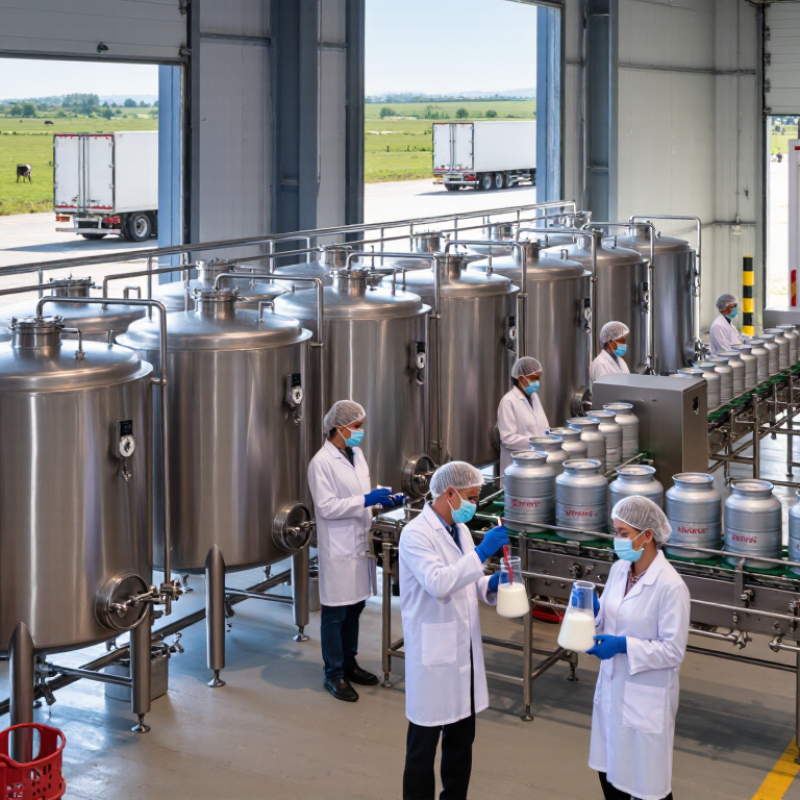
China’s raw milk delivery supplier market is expanding around dairy farms, processors, and cold-chain logistics providers. Global buyers should assess suppliers through documented experience, not attractive quotations alone. A reliable supplier should provide farm origins, collection records, testing procedures, and temperature logs. These details reveal how milk moves from storage tanks to export-ready facilities.
Cold-chain control remains essential. Milk should be collected quickly, sealed properly, and transported under monitored refrigerated conditions. Buyers should request recent results for microbial counts, antibiotic screening, fat content, and protein levels. Independent laboratory verification adds practical confidence. Certificates help, but they do not replace direct supplier audits.
The market is not perfectly transparent. Some information may be incomplete or translated poorly. That deserves careful review. Buyers can begin with a video inspection, then arrange an on-site assessment when volumes justify travel. Ask about backup power, vehicle sanitation, driver training, and recall procedures. Small gaps matter. A delayed temperature record can weaken an otherwise strong supply chain.
Import rules differ by destination. Suppliers must support accurate documentation, compliant labeling, and traceability requirements. Buyers should also confirm whether raw milk is permitted for their intended use. A dependable partnership grows through clear specifications, realistic delivery schedules, and open discussion when problems occur. No supplier should promise perfection. Consistent evidence is more valuable.
Key Criteria for Evaluating Chinese Raw Milk Suppliers
China Top Raw Milk Delivery Suppliers for Global Buyers?
Key Criteria for Evaluating Chinese Raw Milk Suppliers
A practical evaluation begins with farm-level evidence, not a polished sales brochure. Check milking records, animal health controls, feed sources, and staff hygiene procedures. Ask for recent test reports covering pathogens, antibiotics, somatic cell counts, fat, and protein. Reports should identify the laboratory, testing date, and sample batch.
Cold-chain performance matters just as much. Review milk collection times, tanker sanitation logs, storage temperatures, and delivery records. Fresh milk should move through controlled refrigeration with clear temperature limits. Use traceability documents that connect each shipment to a farm, silo, and dispatch time. Small gaps can become expensive problems.
Export buyers should verify food safety certifications, inspection documents, customs requirements, and destination-country rules. An on-site audit is stronger than a video call, although distance can make it difficult. Independent inspectors may provide a more neutral view. Contracts should define acceptance tests, rejection procedures, delivery windows, and responsibility for temperature deviations.
Do not trust one document.
Supplier capacity also deserves careful testing. Request references from comparable buyers, production forecasts, and contingency plans for seasonal changes. A low price may hide weaker testing or unstable logistics. I would still avoid treating certificates as final proof; paperwork can become outdated, and remote reviews miss practical details. A trial shipment can reveal more than several persuasive meetings.
China Top Raw Milk Delivery Suppliers for Global Buyers
Key market context and criteria for evaluating Chinese raw milk suppliers
Leading Supplier Types and Regional Production Centers
China’s raw milk supply market includes mega-farms, regional cooperatives, and smaller family-based producers. Large farms offer consistent volumes, automated milking, and documented quality controls. Cooperatives can provide flexible sourcing across nearby farms. Smaller suppliers may offer local freshness, but their records and testing systems can vary.
The USDA Foreign Agricultural Service estimated China’s milk production at about 41.7 million metric tons in 2024. The report also identified continued expansion in large-scale dairy farming. Key production centers include Inner Mongolia, Heilongjiang, Hebei, Ningxia, Xinjiang, and Shandong. Inner Mongolia and Heilongjiang support high-volume operations, while Hebei benefits from proximity to major consumption markets. Ningxia and Xinjiang provide growing capacity, although transport distances can be challenging.
Regional logistics matter.
For global buyers, supplier evaluation should include farm size, somatic cell counts, antibiotic screening, traceability, and cooling records. Raw milk should be rapidly chilled, normally near 0–4°C, and transported through validated cold-chain routes. USDA data is useful, but local verification remains essential. Production statistics do not always reveal farm-level consistency. A supplier may report strong annual output while lacking reliable daily delivery capacity. Buyers should request independent laboratory results, inspection records, and contingency plans before signing contracts. Cross-border transactions also require approval under destination-country food and animal-health rules.
| Production Center | Main Supplier Type | Indicative Regional Raw-Milk Scale | Key Production Advantages | Typical Delivery Model | Global Buyer Suitability | Important Verification Points |
|---|---|---|---|---|---|---|
| Inner Mongolia | Large dairy farms Integrated processors | One of China’s largest milk-producing regions; provincial annual output is commonly reported in the multi-million-ton range. | Extensive pasture and feed resources, dry climate, large-scale dairy clusters, and strong access to milk-processing infrastructure. | Chilled bulk-tanker delivery from farms to nearby processing plants; rail and road links support longer-distance distribution. | High-volume buyers, ingredient manufacturers, UHT and dairy-powder processors, and buyers seeking long-term supply programs. | Farm size, herd health, somatic-cell count, antibiotic-residue testing, seasonal composition, water quality, and cold-chain records. |
| Heilongjiang | Large-scale farms Dairy cooperatives | A major northern milk-producing base with annual regional output reported in the multi-million-ton range. | Abundant maize and forage resources, cool conditions, established dairy-farming expertise, and access to northeastern logistics. | Farm collection through refrigerated tankers; suitable for delivery to regional dairy plants and northern export logistics hubs. | Suitable for industrial processors, powdered-milk plants, and buyers requiring consistent high-volume raw-material programs. | Winter transport planning, freezing-risk controls, feed traceability, milk protein and fat levels, and approved veterinary-drug records. |
| Hebei | Commercial dairy farms Regional milk collection centers | One of the principal dairy regions surrounding the Beijing–Tianjin–Hebei economic area. | Close proximity to major consumer markets, feed suppliers, processing plants, laboratories, highways, and port infrastructure. | Short-haul refrigerated tanker delivery is common; convenient consolidation through northern processing and logistics centers. | Strong fit for buyers prioritizing delivery frequency, shorter lead times, and access to northern China ports. | Collection radius, tanker sanitation, temperature records, delivery punctuality, official inspection reports, and emergency backup capacity. |
| Shandong | Specialized dairy farms Cooperative collection systems | A major eastern dairy and food-processing province with a substantial commercial milk supply. | Dense transportation networks, strong feed and food-processing industries, and convenient access to eastern ports. | Refrigerated road delivery to processors; port access may support export-oriented dairy ingredient supply chains. | Suitable for eastern-China processors, contract buyers, and importers coordinating sea-freight export programs. | Port-to-plant timing, temperature integrity, microbial limits, aflatoxin M1 testing, adulteration screening, and loading procedures. |
| Xinjiang | Large dairy farms Agricultural cooperatives | An important western dairy-development area with expanding large-farm capacity and regional milk-processing activity. | High solar exposure, large agricultural land resources, local forage production, and potential access to Central Asian trade corridors. | Chilled tanker delivery to regional plants; longer-distance movement requires carefully managed refrigerated transport. | Potentially attractive for buyers seeking western supply diversification or Central Asia-oriented logistics routes. | Transit distance, border and customs requirements, seasonal feed availability, power reliability, and contingency transport plans. |
| Gansu and Ningxia | Regional dairy farms Milk collection cooperatives | Developing northwest production centers with concentrated dairy projects and growing processing capacity. | Dry climate, availability of agricultural by-products and forage, and strategic location between northern and western markets. | Regional chilled-tanker networks; supply is often consolidated at nearby processing facilities before further distribution. | Appropriate for medium-to-large buyers seeking additional northern or western sourcing options. | Reliable year-round volume, farm aggregation controls, transport distance, milk cooling speed, and laboratory testing frequency. |
| Sichuan and Yunnan | Medium-sized dairy farms Local cooperatives | Important southwest dairy areas, generally more fragmented than the largest northern production bases. | Access to southwest consumer markets, varied forage resources, and proximity to regional food and beverage manufacturers. | Short- and medium-distance refrigerated delivery; regional collection centers are important for volume consolidation. | Best suited to regional processors, specialty dairy manufacturers, and buyers that can manage supplier aggregation. | Farm-to-collection traceability, rainy-season road conditions, bacterial counts, cooling infrastructure, and consistency among small suppliers. |
| National Supply Profile | Direct farms Cooperatives Processors Trading consolidators | China’s annual raw-milk output has been around 40 million metric tons in recent years, according to national statistical reporting. | Supply is concentrated in northern and western dairy belts, while major processing and consumption markets are distributed nationwide. | Raw milk is normally collected, rapidly cooled, tested, and transported in insulated refrigerated tankers rather than ordinary cargo vehicles. | Global buyers should match supplier type to volume, specification, delivery distance, export documentation, and required contract stability. | Confirm compliance with applicable Chinese food-safety standards, destination-country import rules, certificates, residue limits, and documented traceability. |
Quality, Safety, and Cold-Chain Delivery Standards
China’s raw milk suppliers for global buyers should be judged by measurable quality, not attractive brochures. FAO’s Food Outlook 2023 estimated global milk production at about 936 million tonnes, increasing pressure on suppliers to prove consistency across large volumes. Reliable producers should provide farm records, veterinary controls, testing results, and traceable batch numbers. Key checks include bacterial counts, somatic cell counts, antibiotic residues, and aflatoxin M1. Independent laboratory verification remains valuable.
Cold-chain discipline is equally important. Codex Alimentarius CAC/RCP 57-2004 recommends cooling milk to 6°C or below when collected daily, and 4°C or below when collection is less frequent. Buyers should request calibrated temperature records from collection tanks to loading bays and receiving points. Tanker seals, cleaning logs, and CIP verification also deserve attention. Small gaps matter.
A professional supplier should maintain HACCP-based controls and preferably operate under a certified food-safety management system, such as ISO 22000. However, certification alone cannot prove every shipment. Buyers should arrange pre-shipment sampling, random arrival testing, and digital traceability reviews. Temperature alarms are useful, but they may fail or be ignored. This uncomfortable point needs honest attention. Contracts should define rejection procedures, testing methods, and responsibility for temperature excursions. A clean tanker is not enough. Reliable delivery depends on evidence, repeated performance, and transparent communication.
Import, Compliance, and Buyer Verification Considerations
China Top Raw Milk Delivery Suppliers for Global Buyers?
Importing raw milk from China requires more than comparing prices and delivery schedules. Each buyer should confirm whether the destination country permits raw milk imports from the proposed origin. Requirements may include an approved exporter, veterinary certificates, health declarations, residue testing, and prior import permits. Rules can differ by product category, shipment size, and destination authority.
A reliable supplier should provide traceability from farm to loading point. Request the farm registration, milking records, batch numbers, laboratory reports, and cold-chain temperature logs. Testing should cover microbial safety, antibiotics, aflatoxin, and other substances required by the destination market. Reports from an ISO/IEC 17025-accredited laboratory are stronger evidence than internal spreadsheets. Still, documents can become outdated.
Buyer verification needs direct checks. Compare the supplier’s legal registration with its export documents. Ask for a recent facility video, but do not treat video proof as a full audit. An independent inspection can examine stainless-steel tanks, cleaning procedures, tanker seals, and loading temperatures. Contracts should define rejection rights, testing methods, delivery temperatures, insurance, and recall responsibilities. Small details matter.
A polished certificate is not proof. Suppliers may answer slowly or provide incomplete records, which deserves careful review. Some buyers also overlook port delays and seasonal milk variation. A cautious trial shipment, supported by sealed samples and independent testing, can reveal problems before long-term purchasing begins.
Related Posts
-
Is Grass Fed Raw Milk the Best Choice for Global Buyers?
-
How to Source Fresh Milk for International Buyers?
-
10 Best Raw Milk Delivery Services You Should Try?
-
How to Choose a Reliable Raw Milk Delivery Supplier?
-
2026 Best Fresh Milk Options for Health and Taste?
-

2026 Top Plant Butter Trends You Need to Know About?