Top Milk Processing Plant Manufacturers Worldwide
Choosing a milk processing plant manufacturer requires more than comparing equipment prices. It demands a close look at hygiene design, processing accuracy, service capacity, and long-term reliability. Manufacturers worldwide differ widely in engineering standards, automation systems, product focus, and regional support.
Louis Pasteur, whose research shaped modern pasteurization, famously said, “Chance favors only the prepared mind.” His words remain relevant inside every modern dairy facility. A prepared manufacturer anticipates temperature variation, microbial risks, cleaning failures, and production downtime. It designs each stage with measurable controls, from raw milk reception and laboratory testing to clarification, separation, pasteurization, homogenization, filling, and cold storage.
Small details matter. Stainless steel welds should be smooth. Sensors must respond quickly. Cleaning-in-place systems need verified chemical concentration, temperature, and flow. A strong supplier should also provide commissioning support, operator training, spare parts, and documented validation procedures. These services often determine whether a plant performs consistently after installation.
This overview examines leading milk processing plant manufacturers across global markets. It considers their technology portfolios, processing capacity, energy efficiency, customization options, and after-sales performance. It also recognizes an uncomfortable reality: no manufacturer is perfect for every dairy business. A large multinational may offer advanced automation but limited flexibility. A smaller specialist may provide closer attention but fewer international resources.
The final choice should reflect milk volume, product range, workforce capability, local regulations, and future expansion plans. A polished brochure is not enough. Factory visits, reference checks, technical audits, and lifecycle cost reviews reveal much more.
Industry Scope and Role of Milk Processing Plant Manufacturers
Top Milk Processing Plant Manufacturers Worldwide
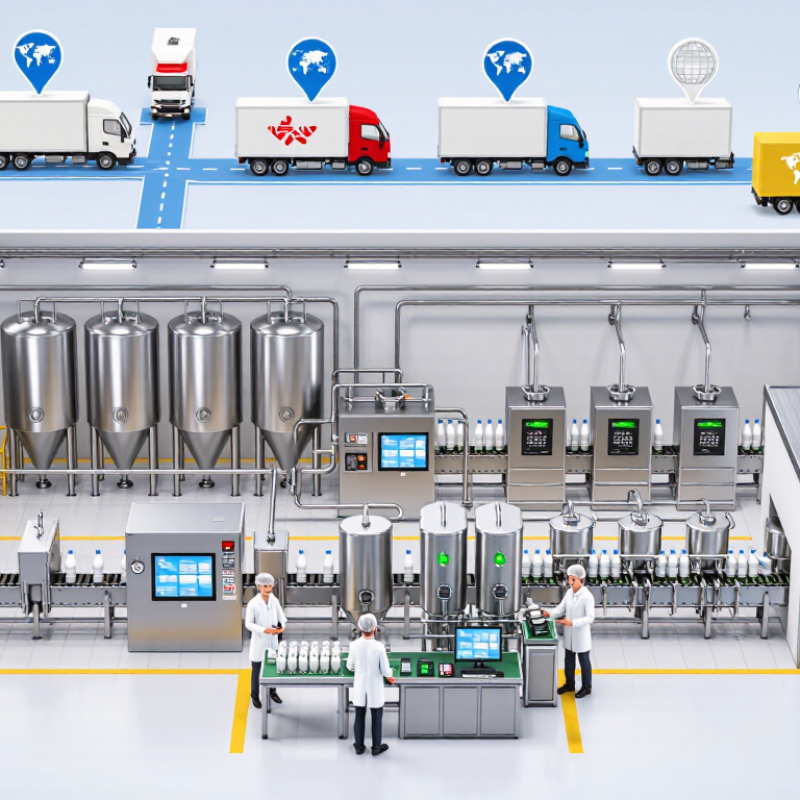
Milk processing plant manufacturers play a practical role beyond supplying stainless-steel equipment. They design connected systems for reception, testing, pasteurization, separation, homogenization, filling, and cleaning. FAOSTAT reports global milk production above 900 million tonnes annually. This scale creates demand for reliable plants that protect quality from farm collection to chilled distribution.
Their industry scope also includes automation, energy management, wastewater control, and food-safety validation. The OECD-FAO Agricultural Outlook 2024–2033 identifies population growth and rising incomes as major drivers of dairy demand, especially in developing markets. Manufacturers must therefore adapt line capacity, local milk quality, climate conditions, and workforce skills. A technically advanced plant can still underperform when operators lack training. That weakness deserves more attention. Practical experience shows that small temperature deviations, poor sensor calibration, or delayed cleaning can reduce shelf life and increase losses. The International Dairy Federation continues to emphasize hygienic design, traceability, and cold-chain discipline across dairy operations.
Tips: Compare total operating cost, not only purchase price. Ask for validated thermal processes, cleaning records, spare-parts plans, and operator training. Check whether the system supports future capacity changes. Energy recovery, heat exchangers, and water reuse may reduce long-term costs, but their value depends on local utilities and maintenance habits. Request measurable performance data from comparable installations. Claims without operating evidence should be questioned. A dependable manufacturer explains limitations clearly and documents every critical control point.
Core Technologies Used in Modern Milk Processing Plants
Modern milk processing plants rely on several connected technologies to protect quality and improve consistency. Clean handling matters. Raw milk enters through insulated pipelines, where flow meters and temperature sensors monitor every transfer. Rapid cooling slows microbial growth before processing begins. Operators also test acidity, fat content, and bacterial indicators during receiving. These checks support traceability, although sensors can drift and still require regular calibration.
Pasteurization uses controlled heat to reduce harmful microorganisms without damaging milk quality. Time and temperature work together. Plate heat exchangers warm the milk quickly, then cool it through separate channels. Regeneration sections recover heat from already-treated milk, reducing energy use. Homogenizers apply pressure to break fat globules into smaller particles. This creates a smoother texture and limits cream separation. A slight pressure variation can affect the final result.
Membrane filtration separates selected components through fine barriers, supporting products such as concentrated milk and protein-rich ingredients. Spray drying then converts liquid concentrate into powder inside a carefully controlled chamber. Automated clean-in-place systems circulate water, alkaline cleaners, and acidic solutions through tanks and pipes. Cleaning programs must match the equipment, not follow a convenient fixed routine. Digital control systems record temperatures, pressures, cleaning cycles, and operator actions. They improve accountability, but human review remains essential when data looks unusual.
Leading Manufacturers and Their Global Market Coverage
Top Milk Processing Plant Manufacturers Worldwide
Leading manufacturers serve global markets through regional engineering teams, local partners, and adaptable production systems. Their portfolios often include pasteurizers, separators, homogenizers, filling equipment, and clean-in-place systems. European suppliers commonly emphasize energy efficiency and advanced automation. North American projects often prioritize high throughput and strict process control. Asia-Pacific manufacturers are expanding quickly, offering flexible layouts and competitive equipment packages. Coverage is also growing across the Middle East, Africa, and Latin America, where reliable service and water-efficient designs matter greatly.
A strong manufacturer should provide more than machinery. It should support plant planning, hygienic design, installation, operator training, validation, and spare-parts access. Local technicians can reduce downtime when a pump fails during a busy production shift. Remote monitoring also helps identify pressure changes or abnormal temperatures early. Still, no supplier fits every market. Some global providers have wide coverage but limited local customization. Others understand regional conditions well but lack long-term service capacity. Buyers should examine both strengths carefully.
Tips: Request references from similar facilities. Compare total ownership costs, not only purchase prices. Check response times for technical support and spare parts. Review energy data from operating plants. Ask whether the proposed system can handle seasonal milk variation. Small details matter. A polished proposal may still hide practical gaps, and even experienced buyers can overlook maintenance access.
How to Evaluate Milk Processing Plant Suppliers
Top Milk Processing Plant Manufacturers Worldwide
How to Evaluate Milk Processing Plant Suppliers
Supplier evaluation should begin with plant performance, not sales presentation quality. FAOSTAT reported global milk production above 950 million tonnes in 2023. That scale demands stable, hygienic, and serviceable processing systems. Ask suppliers for verified data on throughput, product losses, water use, energy consumption, and cleaning time. Compare the same operating conditions. Otherwise, efficiency claims can mislead.
Review hygienic design against Codex General Principles of Food Hygiene, revised in 2022. Stainless steel grades, weld quality, drainage, valve access, and clean-in-place coverage need physical verification. Request factory acceptance testing records and independent validation where possible. ISO 22000 experience is useful, but certification alone cannot prove equipment performance. Visit a comparable installation. Speak with its operators. Their practical complaints may reveal more than a technical brochure.
Tips: Build a weighted scorecard before receiving quotations. Give strong weight to lifecycle cost, spare-parts availability, response time, and training. The European Commission’s Best Available Techniques reference document highlights water and energy efficiency as important dairy-sector controls. Ask for measured figures, not estimates. Also test a difficult product batch, because ideal milk is rarely the only challenge. One weakness remains easy to overlook: local technicians may lack experience with advanced automation. Plan support carefully.
Top Milk Processing Plant Manufacturers Worldwide — How to Evaluate Milk Processing Plant Suppliers
Regional cow milk production is a practical starting point when evaluating plant suppliers. Higher-volume regions generally require greater processing capacity, reliable automation, scalable expansion, and strong local service support.
Data shown in million tonnes of cow milk production, rounded from FAOSTAT regional agricultural production statistics for 2022. Regional output should be considered alongside hygiene compliance, throughput range, energy efficiency, installation capability, spare-parts availability, and after-sales service.
Emerging Trends in Dairy Processing Equipment and Automation
Milk processing plants are moving beyond faster filling and higher throughput. Emerging systems now connect sensors, robotics, and production software across the entire line. The OECD-FAO Agricultural Outlook 2024-2033 projects global milk production to grow by about 1.6% annually. This pressure encourages plants to process more volume while protecting quality, energy use, and traceability.
Automation is becoming more practical. The International Federation of Robotics recorded 541,302 new industrial robot installations worldwide in 2023. In dairy facilities, robots can handle repetitive palletizing, case packing, and material movement. Inline sensors also monitor temperature, flow, pressure, and conductivity during cleaning-in-place cycles. These details help operators detect abnormal patterns before a small deviation becomes a costly batch loss.
Data still needs judgment.
Digital twins and edge analytics can reduce response time, but they do not replace experienced technicians. A sensor may drift after repeated wash cycles. A clean dashboard can still hide poor calibration. Recent dairy engineering guidance therefore emphasizes hygienic design, validated cleaning procedures, cybersecurity, and documented maintenance. Energy monitoring is also gaining attention, especially for refrigeration, steam, and hot-water systems. The International Energy Agency continues to identify industrial efficiency and electrification as major routes for reducing energy demand. Plants adopting automation should measure real operating results, not merely install more equipment.
Related Posts
-
Top 10 Milk Processing Companies in China Revolutionizing the Dairy Industry?
-
Best Practices for Dairy Farming in China What Global Buyers Need to Know
-

Why Is Dairy Farming Essential for Global Food Supply?
-

10 Tips for Choosing the Best Grass Fed Butter for Your Diet
-
How to Choose the Best Dairy Supplies for Your Needs?
-

Top Types of Animal Farm Butter and Their Unique Benefits?