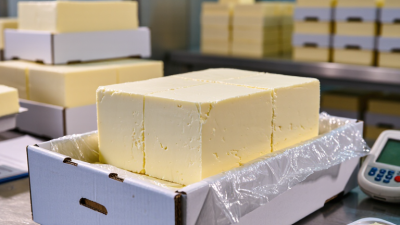
2026 Best Real Butter Suppliers for Global Buyers?
Choosing the best real butter suppliers for global buyers in 2026 requires more than comparing prices. Milk origin, butterfat content, processing controls, and delivery reliability all matter. USDA Foreign Agricultural Service Dairy: World Markets and Trade reports consistently identify the European Union and New Zealand as influential dairy exporters. They also show why export strength differs from domestic production. India produces substantial dairy volumes, yet its export profile remains different from major commercial butter suppliers.
Demand signals also deserve careful attention. The OECD-FAO Agricultural Outlook 2025–2034 describes dairy markets as shaped by population growth, income changes, feed costs, and regional consumption patterns. The FAO Food Outlook provides additional context on food trade, commodity prices, and supply risks. These reports do not name one universally superior supplier. No ranking is perfect.
A reliable 2026 supplier should provide clear specifications, including butterfat percentage, moisture limits, salt level, packaging format, and storage temperature. Buyers should request certificates, batch records, allergen statements, and traceability documents. The Codex Standard for Butter, CXS 279-1971, offers a useful international reference for product identity and composition. Cold-chain performance is equally practical. A pallet arriving with softened cartons tells a different story from a laboratory certificate. Suppliers should also demonstrate experience with customs documentation and destination-market requirements. Some businesses look excellent on paper. Their response time may reveal more. This guide compares established real butter suppliers through product quality, certifications, export capability, pricing transparency, and buyer support. It also recognizes uncertainty, because freight disruption, dairy cycles, and policy changes can quickly reshape the market.
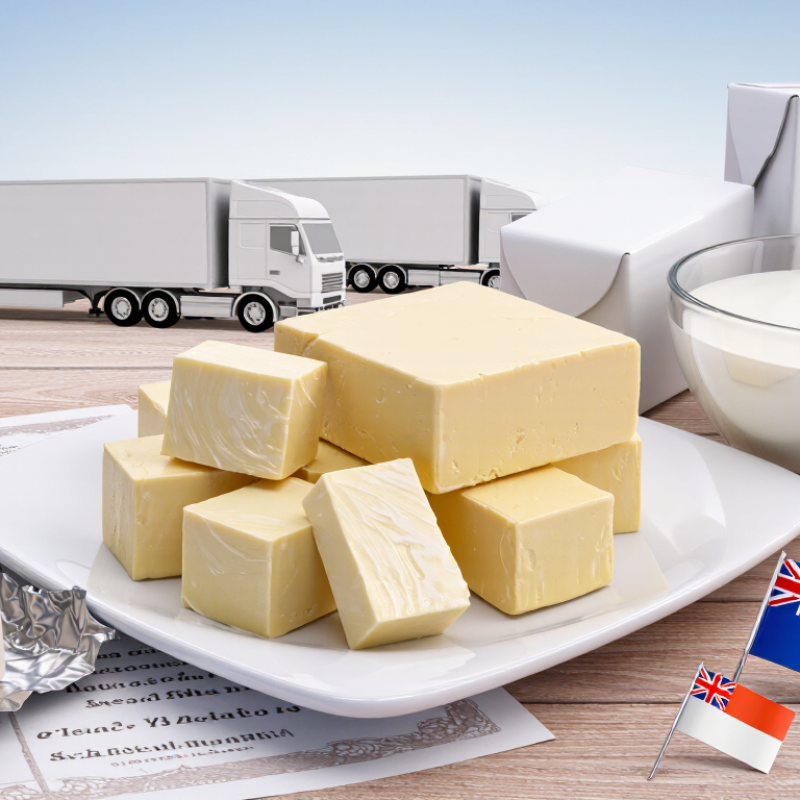
What Defines Real Butter in the 2026 Global Dairy Market
Real butter begins with cream or milk, not refined vegetable oil. In most international trade specifications, butter contains at least 80% milk fat. Water and non-fat milk solids make up the remainder. However, national standards can differ, so buyers should check destination-market requirements.
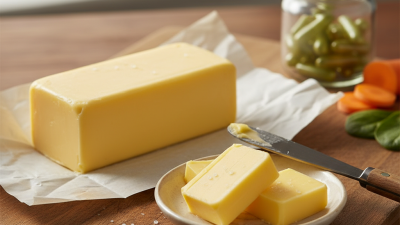
Texture offers useful evidence. Properly churned butter breaks cleanly when cold and softens gradually at room temperature. Its aroma may suggest fresh cream, mild sweetness, or cultured notes. Color can range from pale ivory to deeper yellow, depending on feed and season. Color alone proves little.
Look beyond appearance. Experienced buyers request a certificate of analysis, production date, fat percentage, moisture, microbiological results, and allergen details. Traceable farm sources and temperature records also matter. A reliable supplier should explain how butter stayed frozen or chilled during loading, transit, and storage. Small packaging defects can expose larger handling problems.
I have learned that “natural” is not a complete quality standard. A short ingredient list helps, but it cannot replace testing. Some buyers also overlook salt levels, which can affect bakery formulas and retail labeling. This is where evaluation becomes less tidy. Price, flavor, shelf life, and certification may not align perfectly. Careful sampling, independent verification, and clear contract specifications remain more dependable than attractive claims.
Key Criteria for Evaluating International Butter Suppliers
Choosing the best real butter supplier requires more than comparing prices. International buyers should verify butterfat percentage, moisture levels, salt content, and microbiological test results. Request a recent certificate of analysis for each production lot.
Reliable suppliers can explain their farm sourcing, processing controls, and cold-chain procedures. Ask how butter is stored before shipment. Temperatures should remain stable from factory loading to port delivery. Clear lot codes also matter. They help buyers trace a carton back to its production date and facility.
Experience reveals small weaknesses. A supplier may provide excellent samples but struggle with seasonal demand. I would test several batches, not just one. Packaging should survive long transit, humidity, and repeated handling. Confirm export documents, shelf-life terms, insurance responsibility, and delivery conditions before signing. Independent factory audits add credibility, although audits cannot replace regular quality checks.
Tips: Compare three suppliers using the same checklist. Check butter texture after thawing. Ask for references from similar markets. Review responses carefully. Delayed answers can signal operational problems. Price is important, but inconsistent quality creates higher costs through rejected shipments, reformulation, and customer complaints.
Leading Real Butter Supplier Types and Regional Strengths
2026 Best Real Butter Suppliers for Global Buyers?
Leading Real Butter Supplier Types and Regional Strengths
Global buyers usually choose among dairy cooperatives, large processors, specialty exporters, and regional trading houses. Each type serves a different purchasing need. Cooperatives can offer strong farm traceability and stable milk access. Large processors often provide uniform fat content, private-label packing, and dependable container volumes. Specialty exporters may handle cultured, unsalted, or grass-fed butter with more flexible specifications. Trading houses can simplify sourcing across several origins, but documentation deserves closer review.
New Zealand and Australia are strong options for grass-fed butter and Asia-Pacific delivery routes. European suppliers are known for cultured butter, detailed origin records, and established cold-chain systems. North American processors commonly support high-volume orders, foodservice formats, and consistent technical data. Some South American suppliers compete well on pasture-based production and bulk pricing. Regional strength is not proof of quality. Season, feed, and port temperature still matter.
Before signing, request a recent certificate of analysis, product specification, allergen statement, and traceability sample. Confirm the product is made from milk or cream, not blended with vegetable oils. Labeling rules differ by market. Check butterfat, moisture, salt, culture use, storage temperature, shelf life, and packaging integrity. Ask how suppliers manage power outages or delayed reefer containers. A supplier may pass every document check yet fail during a delayed port call. A low price can hide weak temperature control. That mistake becomes expensive. Ideally, compare two seasons, not one shipment.
Quality, Certification, Packaging, and Cold-Chain Requirements
For global butter buyers, quality begins with measurable composition, not appearance alone. Codex Standard 279-1971 sets butter at least 80% milk fat, with no more than 16% water. Suppliers should provide fat, moisture, microbiological, allergen, and residue results for each lot. ISO 22000 certification supports food-safety controls, while HACCP records reveal how risks are managed daily. USDA Foreign Agricultural Service’s Dairy: World Markets and Trade, April 2025, places global butter production near 12 million metric tons. This scale increases choice, but not automatically reliability.
Packaging must protect butter from oxygen, light, crushing, and temperature swings. Foil-lined blocks, food-grade cartons, and sealed retail portions suit different distribution routes. Ask for pallet dimensions, net weight tolerance, lot coding, and remaining shelf life at shipment. Cold-chain records should show loading, transit, and delivery temperatures. Chilled butter commonly travels around 0–4°C, while frozen stock requires approximately -18°C. These ranges need confirmation in the supply contract. The practical weakness is often the handover between warehouses, where one missing temperature record can weaken an otherwise strong claim.
Tips: Request a retained sample before signing. Check the carton after a simulated delivery. Do not rely on a certificate image alone; verify its scope and expiry. Confirm whether the quoted price includes refrigerated storage, reefer freight, insurance, and border delays. I would also challenge unusually long shelf-life claims. They may be valid, but the processing date and storage history should explain them.
How Global Buyers Can Compare Prices, Terms, and Delivery Risks
For global buyers, comparing butter suppliers starts with a common specification. Record milk origin, butterfat percentage, salt level, packing size, shelf life, and storage temperature. A low price means little if one quote covers frozen delivery and another covers refrigerated delivery. Ask for the price basis, currency, minimum order, and Incoterm in writing. Small differences matter.
Request a landed-cost worksheet for each supplier. Include product price, ocean freight, insurance, customs charges, port handling, inland transport, and inspection fees. Check payment terms carefully. A 30% deposit may look normal, but it increases exposure when production is delayed. Letters of credit can add control, although bank fees and document errors create friction. Short samples and recent laboratory reports help verify consistency before a larger order.
Delivery risk needs practical testing, not optimistic promises. Review production capacity, loading schedules, temperature-monitoring records, and contingency plans for port delays. Ask how the supplier handles damaged cartons, temperature excursions, or reduced remaining shelf life. I have seen buyers compare spreadsheets perfectly, then overlook a three-week transshipment route. That mistake is expensive. A stronger review combines sample approval, a small trial shipment, clear claims procedures, and regular communication. No method is flawless. Weather and inspections still disrupt careful plans.
Related Posts
-
What Is Bulk Butter and How Do Global Buyers Source It?
-
How to Source Grassland Butter Globally in 2026?
-
China Best Milk Delivered Options for Fresh Dairy Products
-
How to Choose the Best Grass Fed Butter for Your Healthy Diet?
-
2026 Top Plant Butter Trends You Need to Know About?
-

Top 10 Dairy Farming Practices in China for Global Buyers?