What Is Bulk Butter and How Do Global Buyers Source It?
Bulk butter is a commercial dairy ingredient purchased in large, standardized quantities. It serves bakeries, food manufacturers, hotels, retailers, and international distributors. Unlike retail packs, it usually arrives in 25-kilogram blocks, cartons, or larger industrial formats.
Global buyers assess more than price. They review butterfat content, moisture, salt level, flavor, color, and production date. Country-specific food requirements also matter. A reliable supplier should provide product specifications, certificates of analysis, allergen information, and clear traceability records. These documents help buyers compare offers and reduce preventable quality disputes.
Cold-chain control remains essential. Bulk butter can absorb odors, soften during transport, or lose quality when storage conditions fluctuate. Experienced buyers confirm loading temperatures, insulated packaging, container settings, delivery schedules, and insurance responsibilities. They may also request samples before signing a larger contract. A sample is useful, but it cannot replace a factory audit or independent testing. That is an easy point to overlook.
Supplier verification should include production capacity, export history, customer references, and food-safety certifications. Buyers should clarify payment terms, minimum order quantities, labeling rules, customs documents, and agreed inspection procedures. Trade terms can shape the final landed cost significantly. A low quotation may hide higher freight, storage, or compliance expenses.
The right sourcing strategy balances consistency, cost, and risk. No single supplier fits every market. Some buyers prioritize stable flavor, while others need flexible packaging or year-round availability. Careful comparison creates stronger purchasing decisions. Still, conditions change, and even a well-planned order may require adjustment. That is why transparent communication and documented quality checks remain central to successful bulk butter sourcing.
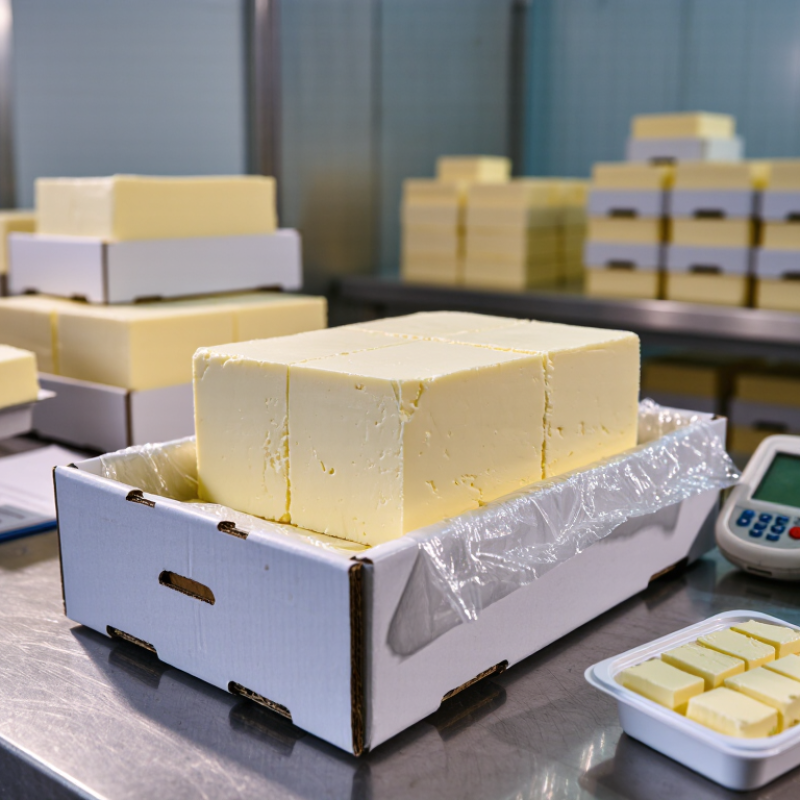
What Bulk Butter Is and How It Differs from Retail Butter
Bulk butter is butter purchased in commercial quantities, usually in blocks, cartons, or lined cases. It is made from cream, like retail butter, but its purpose is different. Retail butter is portioned for household use and wrapped in small, labeled packs. Bulk butter often arrives in 10-kilogram or 25-kilogram cases, depending on the processor and market. The larger format reduces packaging waste and supports predictable production. It also demands better handling. One damaged carton can affect a full batch.
The main difference is not simply size. Professional buyers review milk-fat content, moisture, salt level, grade, origin, production date, and storage requirements. A bakery may need unsalted butter with stable performance in laminated dough. A food manufacturer may prefer salted butter for sauces or prepared foods. Retail butter can meet these needs, but its consumer packaging adds cost and slows handling. Bulk butter usually uses food-grade liners and insulated transport. It must remain frozen or chilled according to its specification. Temperature records matter during shipping, especially across borders.
In practice, sourcing requires more than comparing a price per kilogram. Buyers should request a specification sheet, certificates, sample blocks, and clear delivery terms. Checking the carton after arrival is useful: look for torn liners, leaks, frost damage, or an unusual odor. Bulk butter is efficient, but it is not automatically better. A buyer who orders the wrong salt level may create expensive rework. I have seen how a small labeling assumption can disrupt a production schedule. That risk deserves honest review before a contract is signed.
| Comparison Dimension | Bulk Butter | Retail Butter | Implications for Global Buyers |
|---|---|---|---|
| Primary Definition | Butter supplied in large commercial blocks or cartons for food manufacturers, foodservice distributors, bakeries, restaurants, and repacking operations. | Butter packed in consumer-ready units for direct sale through supermarkets, convenience stores, online shops, or foodservice outlets. | Bulk butter is normally purchased as an industrial ingredient, while retail butter is purchased as a finished consumer product. |
| Typical Pack Formats | Common formats include approximately 10–25 kg cartons, lined cases, or larger industrial packs. Exact formats depend on the exporting market and buyer specifications. | Common formats include approximately 100–500 g packs, often wrapped, boxed, or portioned for household use. | Buyers should confirm net weight, carton dimensions, pallet pattern, inner liner material, and whether the pack is suitable for direct processing. |
| Butterfat and Composition | Usually selected according to a defined butterfat specification. International standards commonly recognize butter with at least 80% milkfat, while some market standards require higher minimum levels, such as 82% for certain types of butter. | Must comply with the composition and labeling rules of the destination market. Salted, unsalted, cultured, and clarified varieties may have different specifications. | The purchase contract should state minimum milkfat, maximum moisture, maximum nonfat milk solids, salt level, and any permitted additives. |
| Salted or Unsalted | Often available in both salted and unsalted forms. Unsalted butter is frequently preferred by manufacturers that need precise control over recipe sodium levels. | Both salted and unsalted versions are widely sold, with the salt level communicated on the consumer label. | Salt content affects formulation, taste, labeling, and sometimes customs classification. It should be agreed before sampling and production. |
| Product Types | May include sweet-cream butter, cultured butter, anhydrous milk fat, clarified butter, and butter intended for bakery, confectionery, or dairy applications. | Usually marketed as standard salted or unsalted butter, with specialty versions such as cultured, whipped, or clarified products in some markets. | Buyers should match the product type with the manufacturing process, melting behavior, flavor profile, and required legal designation. |
| Cold-Chain Handling | Generally transported under refrigerated or frozen conditions. Frozen international shipments are commonly maintained at about −18°C or colder, subject to the product specification and destination requirements. | Usually distributed under chilled conditions, commonly around 0–4°C, although exact requirements differ by jurisdiction and product label. | Temperature requirements should be written into the purchase agreement, shipping instructions, data logger plan, and receiving procedure. |
| Shelf-Life Management | Often supplied with a longer commercial planning window when frozen, but the actual shelf life depends on formulation, packaging, storage temperature, and production date. | Usually carries a shorter consumer distribution cycle because it is sold in smaller packs and often handled through chilled retail logistics. | Global buyers should request the production date, best-before date, minimum remaining shelf life at shipment, and storage history. |
| Packaging Objective | Designed for protection during palletized transport, cold storage, repeated handling, and processing-line use. Packaging commonly uses a carton with an internal food-contact liner. | Designed for product presentation, consumer convenience, portion control, branding, and retail shelf handling. | Bulk packaging can reduce packaging cost per kilogram but may require repacking, labeling, or additional handling at the destination. |
| Price Basis | Normally quoted per kilogram or metric tonne, with pricing influenced by milkfat level, butter type, seasonality, volume, storage condition, freight, and trade terms. | Normally priced per consumer pack or retail kilogram and includes consumer packaging, distribution, merchandising, and retail-related costs. | Buyers should compare landed cost per kilogram rather than only the quoted product price. |
| Minimum Order Quantity | Usually higher than retail purchases and may be quoted by pallet, container, or production batch. The exact minimum depends on the supplier and destination. | Can be purchased in small case quantities, although commercial distributors may still apply case or pallet minimums. | Forecasting demand and consolidating orders can improve freight efficiency and reduce the risk of excess cold storage inventory. |
| Quality Documentation | Common documents may include a product specification, certificate of analysis, allergen statement, microbiological results, traceability information, and storage instructions. | Usually relies primarily on the consumer label and standard retail compliance documents, although commercial buyers may request additional records. | Before purchase, buyers should confirm which documents are required by the importer, customs authority, food regulator, and end-user facility. |
| Food-Safety Controls | Should be produced under an appropriate food-safety management system and controlled for microbiological, chemical, physical, allergen, and foreign-material risks. | Must meet the same applicable food-safety requirements, but the product is additionally prepared for consumer-facing retail distribution. | Supplier approval should include an audit or certification review, recall procedure, traceability test, and verification of cold-chain controls. |
| Import and Customs Checks | May require an import permit, health certificate, veterinary or sanitary documentation, tariff classification, country-of-origin information, and temperature-controlled transport records. | May require similar regulatory documents, plus consumer labeling and language compliance for the destination market. | Requirements vary by destination. Buyers should confirm import conditions before the supplier produces or ships the order. |
| Labeling Requirements | Commercial labels commonly show product name, net weight, lot number, production date, best-before date, storage conditions, country of origin, and handling instructions. | Consumer labels commonly include product name, ingredient list, allergen declaration, nutrition information, net quantity, date marking, storage instructions, and responsible operator details. | Bulk products may need additional local labels or repacking information before they can be sold directly to consumers. |
| Common Sourcing Channels | Direct contracts with approved dairy processors, specialized ingredient distributors, importers, cold-storage traders, or organized procurement programs. | Retail distributors, wholesalers, supermarkets, foodservice suppliers, and online retail channels. | For recurring industrial demand, direct or distributor-based sourcing usually provides better control over specifications, documentation, and delivery planning. |
| Buyer Qualification Process | Typically includes specification review, sample approval, supplier audit or certification review, trial order, documentation check, and performance monitoring. | Usually focuses on consumer appeal, pack format, price, availability, label compliance, and retail presentation. | A written approval process reduces the risk of receiving butter with unsuitable fat content, packaging, age, or temperature history. |
| Best Fit for Industrial Use | Suitable for bakery, confectionery, sauces, prepared foods, foodservice kitchens, repacking, and other applications requiring measured ingredient inputs. | Suitable for household consumption, table service, small kitchens, and recipes that use limited quantities. | Bulk butter normally offers more efficient handling and lower packaging waste per kilogram for high-volume users. |
| Key Purchasing Questions | What are the butterfat and moisture limits? Is it salted or unsalted? What is the pack size? What is the remaining shelf life? What temperature is required? | What is the retail pack size? Does the label meet destination-market rules? Is the product chilled? Is the pack suitable for the intended sales channel? | These questions should be answered in the technical specification and purchase contract before the order is confirmed. |
Related Posts
-
How to Source Grassland Butter Globally in 2026?
-

Why Choose Plant Butter for Your Cooking Needs?
-

What is Bulk Milk and How is it Used in Dairy Industry?
-

Top Milk Processing Plant Manufacturers Worldwide
-

Top Tips for Sourcing Quality Grassland Butter Globally
-
Top 10 Milk Processing Companies in China Revolutionizing the Dairy Industry?
