7 Best Plant Butter Suppliers for Global Buyers
Sourcing reliable plant butter can feel simple until the first shipment arrives. Texture may vary, cartons may soften, and technical documents may be incomplete. This guide introduces seven plant butter suppliers for global buyers seeking consistent quality, transparent sourcing, and practical export support. It focuses on suppliers serving food manufacturers, retailers, bakeries, and personal care producers.
Each supplier should be judged beyond attractive product photos. Buyers need clear specifications for melting point, flavor, color, moisture, and shelf life. Certificates such as HACCP, ISO, organic, or non-GMO status may also matter, depending on the market. Traceability is equally important. Can the supplier identify the origin of the raw material and explain each processing step?
Small details often reveal operational strength. Ask how pallets are protected during humid sea transport. Confirm whether sample approval matches the bulk formulation. Review minimum order quantities, lead times, private-label options, and export documentation before signing an agreement. A responsive sales team helps, but technical support matters more when reformulation becomes necessary.
No supplier is perfect. A low price may hide higher testing costs, while premium packaging may not improve product performance. Some information may remain unclear during the first inquiry. That deserves careful follow-up, not blind trust. The best choice depends on your application, destination, budget, and risk tolerance. Use this overview as a practical starting point, then verify current certificates, capacity, and commercial terms directly with each supplier.
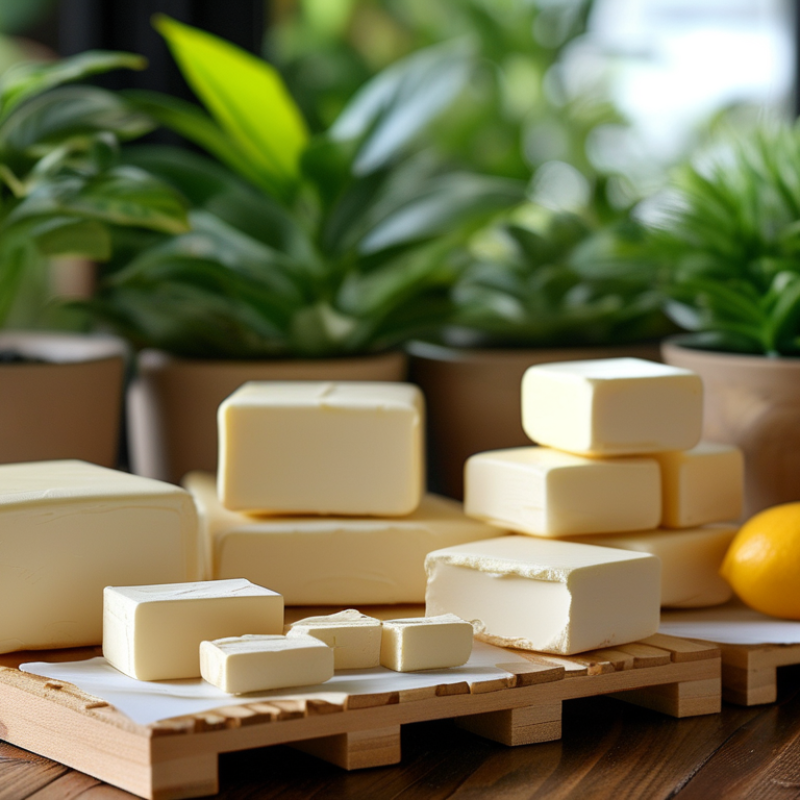
What Plant Butter Is and Why Global Buyers Choose It
Plant butter is a spreadable fat made mainly from oils, water, emulsifiers, and natural flavorings. Common oil sources include coconut, shea, sunflower, and rapeseed. Some formulas also contain salt, starch, or plant proteins for texture. It contains no dairy milk, so it can suit vegan and lactose-free product lines. However, “plant butter” has no perfectly uniform global formula. That matters.
The Good Food Institute reported US plant-based retail sales of about $8.1 billion in 2023. Its data shows strong consumer interest beyond plant-based milk. FAO estimates that livestock supply chains create roughly 14.5% of human-caused greenhouse-gas emissions. These figures help explain why buyers explore dairy alternatives. Still, environmental claims require careful verification. Oil origin, land use, refining, packaging, and transport can change the final impact. A lower-impact label is not automatic proof.
For international sourcing, buyers should request ingredient specifications, allergen controls, shelf-life tests, and shipment stability data. The product should remain firm after temperature changes, yet spread smoothly from a refrigerator. Small differences matter. A supplier’s technical team should explain melting behavior, flavor neutrality, and bakery performance. Certifications can support trust, but certificates need checking against the actual production site. Cost also deserves scrutiny. Cheaper oil blends may create waxy textures or unstable emulsions. The best choice depends on application, climate, regulations, and consumer expectations—not only the front-label claim.
Key Criteria for Evaluating Plant Butter Suppliers
Choosing among the 7 best plant butter suppliers requires more than comparing prices. Global buyers should examine formulation, documentation, and performance under real shipping conditions.
The 2023 U.S. retail report from the Good Food Institute, Plant Based Foods Association, and Circana valued plant-based food sales at 8.1 billion dollars. However, category growth was uneven, so buyers should avoid forecasts based only on market excitement. Request a current certificate of analysis, allergen statement, ingredient specification, and batch traceability record. Verify whether the supplier controls production or relies on subcontractors. Check oil origin, hydrogenation status, melting point, salt level, and refrigeration requirements. Small details matter.
Test the butter in a warm bakery, a cold spread, and a pan. Ask for pilot samples from different batches. Review microbial limits and food-safety certification against destination-market requirements, including Codex hygiene principles and local labeling rules. The FAO Food Outlook also highlights continuing volatility in edible-oil supply and prices, making dual sourcing practical for large buyers. Compare minimum order quantities, lead times, pallet configuration, and temperature-control procedures. A low quotation may become expensive after port delays or rejected cartons.
I would score suppliers on quality consistency, evidence, responsiveness, and corrective-action history. Perfect documentation is uncommon. That is worth questioning. A supplier that openly explains one weak area may be more reliable than one offering polished but vague answers.
Key Criteria for Evaluating Plant Butter Suppliers
This buyer-oriented benchmark ranks the factors commonly used when assessing plant butter suppliers for international purchasing. Food safety, ingredient transparency, supply reliability, production capacity, product stability, sustainability traceability, and commercial terms should be reviewed together before qualification.
Profiles of Seven Leading Plant Butter Suppliers
The seven leading plant butter suppliers serve different buyer needs. One specializes in coconut butter, offering a smooth texture and tropical aroma. Another focuses on shea butter, with detailed refining records and stable bulk packaging. A third supplies cocoa butter for confectionery applications, supported by melting-point data and batch certificates.
A fourth supplier develops oat butter for dairy-free spreads and bakery fillings. The fifth provides almond butter, with strong allergen controls and clear origin records. A sixth works with sunflower butter, offering a neutral flavor for sauces and prepared foods. The seventh creates blended plant butters, combining several oils for improved spreadability and cost control. Each profile deserves close review. No supplier is perfect.
Tips: Request recent certificates of analysis, allergen statements, and sample cartons before ordering. Check texture after storage at room temperature and under refrigeration. Ask how suppliers trace farms, processors, and production batches. Confirm minimum order quantities, lead times, packaging materials, and export documents. A video audit can reveal practical details, such as warehouse cleanliness and label accuracy. Do not rely on attractive sustainability claims alone. Compare measurable evidence. Some samples may perform well in a kitchen but fail during industrial mixing. Small pilot trials can expose that weakness early.
Product Quality, Certifications, Packaging, and Customization
When comparing seven plant butter suppliers, product quality should be checked beyond a smooth sample. Ask for batch records, ingredient specifications, allergen controls, and shelf-life data. A reliable supplier can explain how texture changes between production lots. Test melting behavior, aroma, color, and spreadability at realistic storage temperatures. Small differences matter in bakery, confectionery, and cosmetic applications.
Certifications provide useful evidence, but they are not the whole answer. Request current certificates, audit dates, and the exact facilities they cover. Depending on the market, buyers may need organic, non-GMO, vegan, food-safety, or religious compliance documentation. Verify certificates with the issuing body when possible. Packaging also deserves close attention. Food-grade liners, sealed cartons, pallet stability, and moisture protection can prevent costly damage during long-distance transport. Ask for photographs of packed goods, not only product images.
Customization may include fat profiles, particle size, flavor strength, carton dimensions, private labels, or minimum order quantities. Confirm whether changes require new testing and how long approval takes. A written specification reduces misunderstandings. Still, no checklist is perfect. A sample may perform well in the laboratory and poorly in a warm warehouse. Request a pilot shipment before committing to large volumes. Review communication speed, complaint handling, and traceability records. These practical details often reveal more than polished sales materials.
How to Compare Prices, Logistics, and Export Support
7 Best Plant Butter Suppliers for Global Buyers
Comparing plant butter suppliers requires more than checking the quoted price. Request identical specifications, including fat content, moisture level, pack size, pallet quantity, and shelf life. A lower price may hide higher minimum order quantities or expensive private-label packaging. Calculate the landed cost per kilogram, including freight, insurance, customs charges, and inland delivery.
Logistics can change the decision quickly. The World Bank’s 2023 Logistics Performance Index shows major differences in customs efficiency, infrastructure, and shipment reliability across exporting countries. Ask suppliers for temperature requirements, loading photos, carton dimensions, and a written plan for delays. Some products require chilled transport, while others remain stable under controlled ambient conditions. Do not assume. Confirm it.
Export support is equally important. Reliable suppliers should provide commercial invoices, packing lists, certificates of analysis, allergen statements, and origin documents. UNCTAD reported that global maritime trade grew by about 2.4% in 2023, while route disruption continued to affect schedules and costs. Ask for two freight options: a standard route and a faster alternative. Compare transit days, port handling, demurrage exposure, and communication speed. A practical test is simple: send the same technical questions to seven suppliers and measure response quality. Fast replies can still be incomplete. That is where buyers often overestimate reliability.
Related Posts
-
Top Benefits of Fresh Milk for Health and Wellness?
-

Best Practices for Dairy Farming in China What Global Buyers Need to Know
-
How to Choose the Right Dairy Supplies for Your Farm Business?
-

Top 10 Benefits of Grass Fed Raw Milk for Global Buyers?
-
Best Raw Butter for Global Buyers Seeking Quality?
-
2026 Best Milk Cream Products for Global Buyers?